Best Food for Pugs: What Should Your Pug Eat?
Pugs need balanced, portion-controlled meals. Here is how to choose food that supports their health.
Health note: This article is for general information only and is not a substitute for veterinary advice. Always consult a qualified veterinarian about your pug's specific health, diet, or symptoms.
Pugs love food. Deeply, enthusiastically, and sometimes aggressively. If you've had yours for more than a week, you already know this. The challenge isn't getting a pug to eat — it's making sure they don't eat everything in sight, because pugs are one of the breeds most at risk of obesity, and extra weight hits them harder than it does most dogs.
Getting the food right matters a lot with this breed. Here's what you need to know.
Why Pugs Need Specific Feeding Attention
Pugs aren't just small dogs with flat faces. Their shape affects how they eat, how much energy they can safely burn off, and how their body handles weight.
A healthy adult pug typically weighs between 14 and 18 pounds, according to the AKC breed standard. That's not much room before "a little chubby" becomes "medically overweight." And unlike a Labrador who can exercise off extra calories, pugs struggle with heat and breathing during exercise, which makes it harder to keep weight down through activity alone. Diet does most of the heavy lifting.
Their flat face (the technical term is brachycephalic) also means some pugs eat faster than their digestive system appreciates, gulping air along the way. This can cause bloating, gassiness, and discomfort — something worth keeping in mind when choosing how to serve their meals.
What Makes a Good Pug Food
You don't need to spend a fortune on food, but you do need to read the label carefully.
Look for a named protein as the first ingredient. Chicken, turkey, beef, lamb, salmon — any of these is a good sign. "Meat by-products" or "animal meal" as the first ingredient is less ideal, though not necessarily dangerous. What you want to avoid is a food where the first several ingredients are all grains or starchy fillers with protein listed far down the list.
Check the protein and fat percentages. For an adult pug at a healthy weight, a food with around 20–30% protein and moderate fat (around 10–15%) is a reasonable target. If your pug is already overweight, look for a lower-fat or weight-management formula and ask your vet about portion adjustments.
Omega fatty acids matter. Pugs are prone to skin issues and can have dry, itchy coats. Foods with added omega-3 and omega-6 fatty acids (often from fish oil or flaxseed) help with coat condition and skin health over time.
AAFCO statement. Look for the phrase "complete and balanced" backed by AAFCO (Association of American Feed Control Officials) nutritional guidelines. This tells you the food has been formulated to meet minimum nutritional requirements for dogs at the stated life stage.
Dry Food, Wet Food, or Both?
Most vets recommend dry kibble as the main diet for pugs. It's calorie-controlled, convenient, and chewing it provides some mild dental benefit. Wet food tends to be higher in moisture and often more palatable, but it's also easier to overfeed and harder to control calories with.
A common approach is to use dry food as the main meal and occasionally add a small spoonful of wet food for variety or to encourage a fussy eater. Just keep track of the total calories — even a tablespoon of wet food adds up over time for a 15-pound dog.
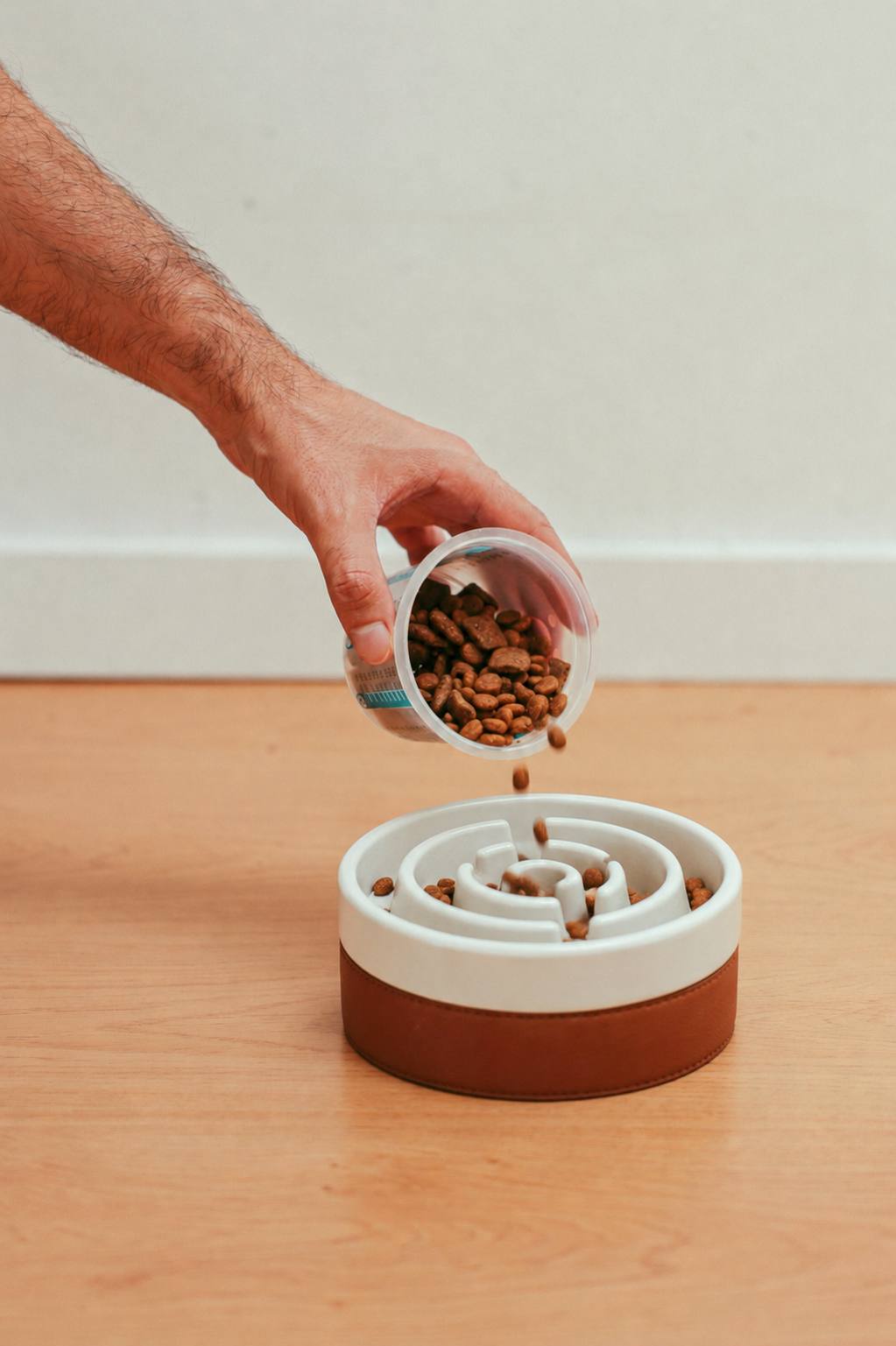
A note on flat-faced eating. Some pugs do better with a shallow, wide bowl rather than a deep one — it's easier for them to access food without straining their neck. Slow-feeder bowls (bowls with ridges or mazes inside) can help if your pug bolts their food, which reduces air gulping and the gassy aftermath.
You may see recommendations for elevated feeding bowls online. The evidence on these is mixed. Elevated bowls have been associated with an increased bloat risk in large, deep-chested breeds, though the data is less clear for small dogs. If your pug eats too fast and seems uncomfortable afterward, a slow-feeder bowl at ground level is a safer starting point. Ask your vet if you're unsure.
How Much Should You Feed a Pug?
This is where most owners go wrong — not because they're careless, but because feeding guidelines on dog food bags are almost always too generous. They're written for average dogs; pugs have slower metabolisms and less exercise tolerance than most.
A rough starting guide for adult pugs at a healthy weight:
Most adult pugs (14–18 lbs) do well on roughly ½ to ¾ cup of dry kibble per day, split into two meals
This varies significantly by the caloric density of the food — a high-calorie premium kibble needs a smaller portion than a standard one
Always check the specific food's guidelines, then adjust based on your pug's weight trend
The best way to judge whether you're feeding the right amount: you should be able to feel your pug's ribs without pressing hard, but not see them. If you can't feel the ribs at all, they're probably carrying too much weight. If the ribs are clearly visible, they may need a bit more.
Weigh your pug every month or two, especially in the first year. Small changes are much easier to address early.
Feeding Schedule by Life Stage
Pug puppies (8 weeks to 3 months): Three to four small meals per day. Their blood sugar can drop if they go too long without food at this age.
Pug puppies (3 to 6 months): Three meals per day is usually fine.
Pug puppies (6 months to 1 year): You can transition to two meals a day.
Adult pugs (1 to 7 years): Two meals per day. Splitting the daily amount into morning and evening helps prevent hunger, reduces gulping, and keeps their energy steadier.
Senior pugs (7 years and older): Continue with two meals. Many vets recommend switching to a senior formula at this point, which tends to have lower calories, higher fiber, and sometimes added joint support like glucosamine. Talk to your vet about when to make this change.
A Word on Grain-Free Diets
Grain-free dog food became very popular, but in 2018 the FDA began investigating a possible link between grain-free diets (specifically those high in legumes like peas and lentils) and dilated cardiomyopathy (DCM), a serious heart condition in dogs. The investigation is ongoing and the science isn't fully settled, but several veterinary cardiologists have recommended caution.
Unless your vet has recommended grain-free food for a specific reason (such as a diagnosed grain sensitivity), there's no strong evidence that most dogs need to avoid grains — and some reason to be cautious about diets heavily based on peas, lentils, or potatoes as main ingredients.
Safe Human Foods Pugs Can Eat (as Occasional Treats)
Plain, unseasoned versions only — no salt, no spices, no sauces.
Cooked chicken or turkey (great low-calorie treat)
Carrots (pugs love these, and they're low-calorie)
Green beans
Blueberries
Watermelon (no rind or seeds)
Apple slices (no seeds or core)
Plain pumpkin purée — not pie filling, which has added sugars and spice
Plain cooked oats or plain rice in small amounts
Treats and extras should make up no more than 10% of your pug's daily calories. It's very easy to tip over that limit with a breed this small.
Foods That Are Toxic to Pugs (and All Dogs)
These should never be given, even in small amounts:
Chocolate — especially dark chocolate and baking chocolate
Grapes and raisins — can cause acute kidney failure; even small amounts are dangerous
Onions and garlic — in any form (raw, cooked, powdered)
Xylitol — an artificial sweetener found in some peanut butters, chewing gum, and baked goods; can be fatal
Macadamia nuts
Avocado — particularly the flesh, skin, and pit
Alcohol — in any quantity
Caffeine — coffee, tea, energy drinks
Raw yeast dough — can expand in the stomach
If your pug eats something from this list, contact your vet or the ASPCA Animal Poison Control Center immediately.
When to Talk to Your Vet About Feeding
Your pug is gaining weight despite eating the recommended amount
Your pug refuses food for more than a day or two
You notice bloating, excessive gas, or vomiting after meals
You're considering a raw food, homemade, or grain-free diet
Your pug has a health condition (diabetes, kidney disease, allergies) that may need a specific diet
You're not sure whether your puppy is growing at a healthy rate
Disclaimer: This article provides general guidance based on widely accepted nutritional principles for dogs. It is not a substitute for veterinary advice. Every pug is different — always consult your vet before making significant changes to your pug's diet, especially if they have existing health issues.
FAQ
How often should I feed my adult pug?
Twice a day works well for most adult pugs — once in the morning and once in the evening. Splitting meals helps prevent hunger, reduces the chance of gulping food, and keeps their blood sugar stable. Free-feeding (leaving food out all day) usually leads to overeating with this breed.
My pug always acts hungry. Is that normal?
Yes, unfortunately. Pugs are notorious for acting starving no matter how recently they've eaten. This is a breed trait, not a sign that you're underfeeding them. As long as your pug is at a healthy weight, hold the line on portions. Carrots and green beans make good low-calorie extras if you need to give them something.
Can pugs eat peanut butter?
Plain peanut butter (made from just peanuts, nothing else) is generally safe in small amounts as an occasional treat. The important thing is to check the label — some brands contain xylitol, which is toxic to dogs. Always read the ingredient list before giving your pug any peanut butter.
Should I feed my pug a small-breed or large-breed formula?
Small-breed formulas, yes. They're designed with smaller kibble sizes (easier for flat-faced dogs to chew) and calorie densities appropriate for smaller dogs. Large-breed formulas are calibrated for much bigger dogs and aren't ideal for pugs.
How do I know if my pug is overweight?
The rib test is a useful check: run your hands along your pug's sides. You should be able to feel individual ribs without digging in, but the ribs shouldn't be clearly visible. Also look from above — a healthy-weight pug should have a slight waist visible behind the ribcage. If they look like a sausage from above, they're probably carrying extra weight. Your vet can give you an official body condition score at their next check-up.
Is wet food bad for pugs?
Not bad, but easy to overfeed. Wet food is fine in small amounts — many owners use a spoonful mixed with kibble — but it's harder to portion accurately and can add significant calories. If you use it regularly, make sure you're accounting for those calories in your pug's daily total.
Related Articles
Can Pugs Be Left Alone? Separation Anxiety Guide
How long can a pug be left alone, signs of separation anxiety, and practical steps to help your pug feel calm when you're out.
Read more →
Is a Pug Right for You? Honest Guide for Future Owners
Thinking about getting a pug? Read the honest pros, cons, health needs, lifestyle fit, and real ownership costs before you commit.
Read more →Are Pugs Easy to Train? Beginner Training Guide
Pugs can be stubborn, but they are trainable. Learn what actually works, how short sessions should be, and the biggest mistakes to avoid.
Read more →