Pug Health Issues: Common Problems to Watch For
Understand common pug health issues, including breathing problems, eye problems, skin folds, weight gain, overheating, and when to call your vet.
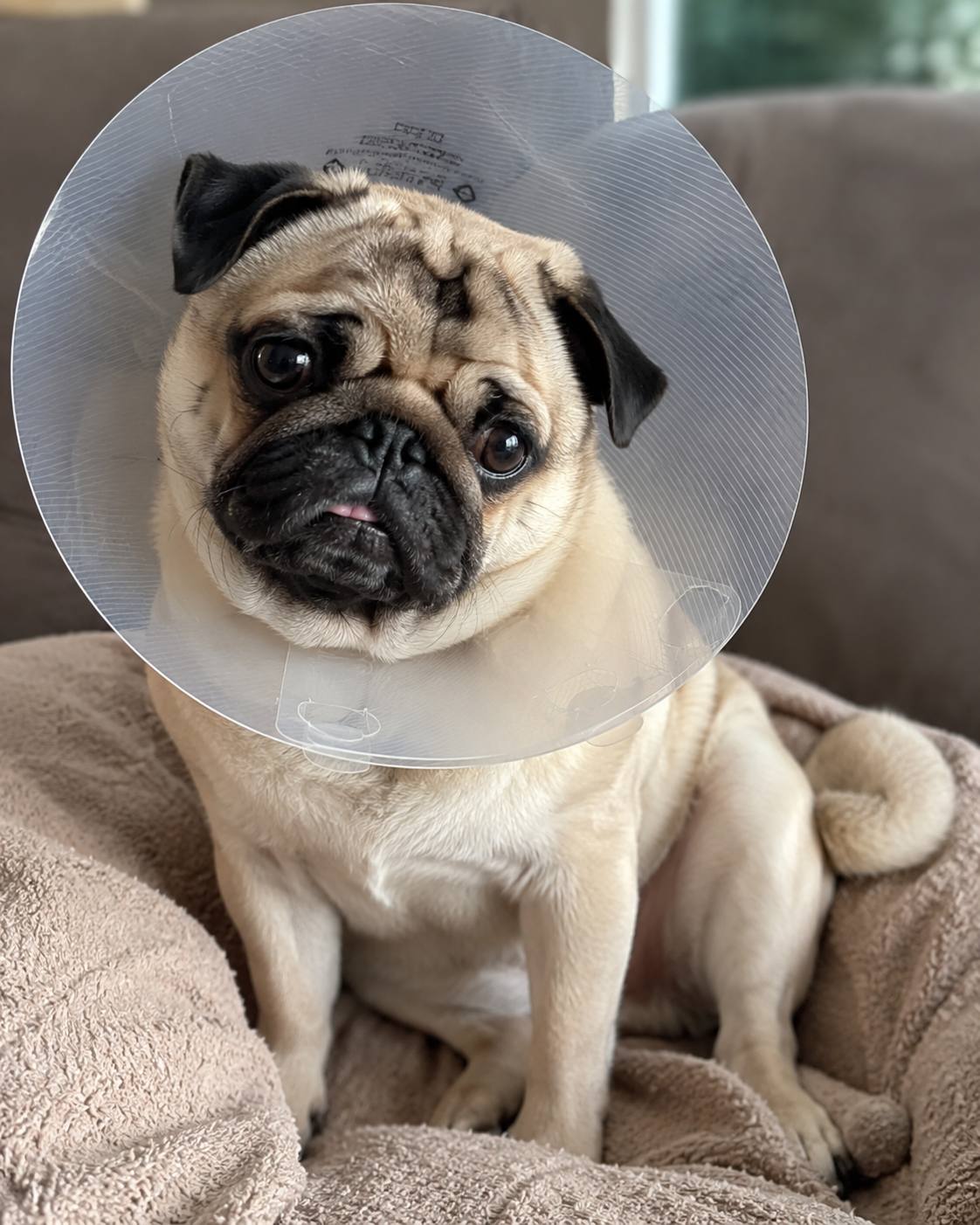
Health note: This article is for general information only and is not a substitute for veterinary advice. Always consult a qualified veterinarian about your pug's specific health, diet, or symptoms.
Pugs are funny, affectionate, and surprisingly stubborn little dogs. They're also one of the breeds that vets see most often for preventable or manageable health issues. That's not a reason to panic — it's a reason to be informed.
Most pug health problems come down to one thing: their anatomy. That flat face, compact skull, and stocky body that makes them look so distinctive also makes them more vulnerable to specific conditions. Understanding this early makes a real difference in how you care for your pug and how quickly you catch problems.
Please note: this article is for general information only. If your pug is showing any of the symptoms described here, contact your vet. Nothing here is a substitute for professional veterinary advice.
Common Pug Health Issues
The most common pug health issues are breathing problems linked to their flat face, eye injuries and infections, skin fold dermatitis, weight gain, joint problems, and overheating in warm weather. Most of these are manageable with regular vet checks and good daily care. The sections below cover each issue in more detail. For heat safety specifically, see our guide on how to keep a pug cool in summer.
Pug Health Problems by Body Area
It can help to think about pug health by body area: airways and breathing, eyes, skin and folds, joints and spine, and overall weight and temperature regulation. The conditions below are grouped roughly in that order.
Breathing Problems (BOAS)
This is the big one. Brachycephalic Obstructive Airway Syndrome — usually just called BOAS — is extremely common in pugs. The term brachycephalic simply means flat-faced, and it describes a group of breeds including pugs, French bulldogs, and English bulldogs whose skull shape affects their upper airway.
In pugs, BOAS typically involves a combination of narrow nostrils, an elongated soft palate, and a narrowed trachea. This makes breathing harder work than it should be.
Signs that breathing may be a problem:
Loud snoring or stertor (a low, rattling breathing sound) even when awake
Frequent gagging or retching
Struggling to breathe after mild exercise
Blue or pale gums — this is an emergency
Sleeping in unusual positions to open the airway (chin propped up, neck stretched)
Not every pug with noisy breathing needs surgery. Many pugs live comfortably with mild BOAS and just need owners to manage exercise, heat, and weight carefully. But some pugs have airways narrow enough that surgical correction significantly improves their quality of life.
Your vet can assess your pug's airway and grade how severe the obstruction is. If you're concerned, it's worth asking for a BOAS evaluation — especially if your pug seems to struggle in warm weather or after short walks.
Eye Problems
Pugs have large, prominent eyes set in shallow sockets. This makes them expressive and appealing — and also genuinely vulnerable to eye injuries and conditions that other breeds rarely face.
Corneal ulcers are one of the most common pug eye emergencies. Because pug eyes protrude, they can get scratched or dried out easily. A corneal ulcer causes pain, squinting, discharge, and cloudiness. They need veterinary treatment promptly — untreated ulcers can cause permanent damage.
Pigmentary keratitis is a chronic condition where dark pigment spreads across the cornea, gradually affecting vision. It's often linked to irritation from eyelid or eyelash problems. It can't be fully reversed but can sometimes be slowed.
Entropion is when the eyelid rolls inward, causing eyelashes to rub against the eye surface. It causes chronic irritation and often needs surgical correction.
Proptosis — where the eye partially comes out of the socket — is rare but possible in pugs, usually from trauma or rough handling around the head and neck. This is an emergency requiring immediate veterinary care.
Watch for any squinting, rubbing at the eyes, cloudiness, or changes in eye colour. Pug eyes need regular checks, and any new symptom that doesn't clear up in 24 hours deserves a vet visit.
Skin Fold Dermatitis
Those deep facial wrinkles that pug owners love are also prime territory for bacteria and yeast to grow. Moisture, heat, and friction build up in the folds, and without regular cleaning, infection sets in.
You'll usually notice skin fold dermatitis as redness, a bad smell, discharge, or dark staining in the creases — particularly the nose fold and the fold under the tail.
Cleaning pug wrinkles regularly is one of the most practical things you can do for your pug's skin health. Dry the folds thoroughly after cleaning, as trapped moisture is part of the problem.
If a fold is already red, sore, or smells infected, a vet can prescribe the right treatment. Home cleaning alone won't clear up an active infection.
Obesity
Pugs love food. They're also built in a way that makes extra weight genuinely dangerous for them. Obesity in a pug puts pressure on already-compromised airways, makes joint problems worse, increases overheating risk, and shortens their life.
It's easy to overfeed a pug without realising it. They're food-motivated, they beg convincingly, and their small size means a few extra treats add up fast.
A healthy pug should have a visible waist when viewed from above and a slight tuck when viewed from the side. You should be able to feel their ribs without pressing hard, but not see them prominently.
Talk to your vet about the right daily calorie intake for your pug's age, weight, and activity level. The guidelines on dog food bags are often calculated for average dogs and may not be appropriate for your pug.
Joint Problems: Patellar Luxation and Hip Dysplasia
Patellar luxation — where the kneecap slips out of place — is one of the more common orthopaedic problems in small breeds, and pugs are no exception. Mild cases may cause occasional skipping or lifting of a hind leg during a walk. More severe cases cause persistent lameness and pain.
Hip dysplasia, where the hip joint doesn't form correctly, is also seen in pugs. Signs include a bunny-hop gait, reluctance to climb stairs, stiffness when getting up, or reduced activity.
Both conditions range from mild to severe. Mild cases are often managed with weight control, physiotherapy, and sometimes medication. Severe cases may need surgery.
If your pug is limping, skipping steps, or seems stiff, a vet check and X-rays will give you a clear picture.
Hemivertebrae
This is a less well-known issue but worth understanding. Hemivertebrae are malformed, wedge-shaped vertebrae in the spine. They occur in screw-tailed breeds — which includes pugs — because the genetics behind that characteristic curled tail also affect vertebrae elsewhere in the spine.
Many pugs have hemivertebrae that cause no symptoms at all and are found incidentally on X-rays. But in some cases, the deformity puts pressure on the spinal cord and causes neurological problems: weakness in the hind legs, incontinence, difficulty walking, or loss of coordination.
If your pug develops any of these signs, particularly in young adulthood, this condition needs to be ruled out.
Pug Dog Encephalitis (PDE)
This is one of the most serious conditions specific to the breed. Pug Dog Encephalitis is an inflammatory brain disease that affects pugs more than any other breed. It's believed to have a genetic basis, and there is no cure.
PDE typically presents in young to middle-aged pugs — most cases are seen in dogs under five years old. Symptoms include seizures, loss of coordination, circling, behavioural changes, pressing the head against surfaces, and rapid deterioration.
It's important to be aware of this condition, but it's also worth being measured about it. PDE is serious, but it is not something every pug will develop. If your pug has a seizure of any kind, get them to a vet promptly — seizures have many causes, and early diagnosis helps.
Allergies and Skin Irritation
Pugs can develop both environmental allergies (pollen, dust mites, mould) and food allergies. Skin problems are the most common sign in dogs — itching, redness, recurring ear infections, or chewing at the paws. Skin fold infections can also be worsened by allergies.
If your pug is constantly itching without an obvious cause, a vet visit is worthwhile. Allergy management often involves identifying and reducing triggers, dietary changes, or medication — and it's usually very manageable once the cause is identified.
Heat Sensitivity
Because of their compromised airways, pugs can overheat very quickly. They cannot cool themselves as efficiently as dogs with normal anatomy. Heatstroke is a genuine risk in warm weather, even during a short walk.
Signs of overheating include excessive panting, drooling, distress, weakness, vomiting, and pale or blue gums in severe cases. Heatstroke is a medical emergency.
Keep pug exercise to cooler parts of the day in summer. Never leave a pug in a car. Know the signs — and if you're in doubt, act quickly.
Dental Disease
Pugs have the same number of teeth as other dogs, packed into a much smaller jaw. Overcrowding means plaque and tartar build up more quickly, and dental disease is common.
Regular tooth brushing, dental chews, and veterinary dental checks help. Dental disease doesn't just affect the mouth — untreated infections can affect heart, kidney, and liver health over time.
When to Call a Vet
Some symptoms in pugs need same-day veterinary attention rather than a wait-and-see approach. Call your vet promptly if your pug has pale, blue or grey gums, sudden difficulty breathing at rest, a suspected eye injury or cloudy eye, a seizure, sudden weakness in the back legs, persistent vomiting or diarrhoea, or signs of heatstroke. For ongoing changes — gradual weight gain, new noisy breathing, recurring skin fold redness, or stiffness — book a routine appointment rather than waiting for the next annual check. This article is general information only and does not diagnose any condition; your vet is the right person to assess your individual pug.
Keeping Perspective
Reading this list, it's easy to feel anxious. But most pugs live happy, comfortable lives. Many of these conditions are manageable or preventable with good care, regular vet checks, and early attention to warning signs.
The best thing you can do is find a vet who knows the breed, keep your pug at a healthy weight, and make regular checks part of your routine — eyes, skin folds, breathing, movement. You don't need to be an expert. You just need to know your dog well enough to notice when something seems off.
FAQ
How do I know if my pug's breathing is normal or a problem?
Some noise is normal for pugs — they snore, snuffle, and breathe loudly by design. The concern is when breathing becomes laboured, noisy even at rest, or when your pug seems to be struggling during mild exercise or in cool conditions. If you're unsure, video your pug breathing at rest and during a short walk and show your vet.
Can pug breathing problems be fixed?
In cases where the anatomy is significantly obstructing the airway, surgical correction can make a meaningful difference to quality of life. This usually involves widening the nostrils and shortening the soft palate. Outcomes are generally good when surgery is done by an experienced vet. Your vet can assess whether surgery would benefit your pug.
My pug keeps rubbing their eye. Should I be worried?
Occasional eye rubbing is common, but if your pug is persistently squinting, has discharge, or you can see any cloudiness or change in the eye surface, see a vet promptly. Pug eyes are vulnerable to corneal damage and things can progress quickly.
What does a healthy pug weight look like?
There's no universal answer because healthy weight varies with size and build, but generally a healthy pug has a visible waist from above, a tuck behind the ribs from the side, and ribs you can feel but not easily see. Your vet can assess your individual pug and give you a target weight.
Is Pug Dog Encephalitis common?
PDE is a known breed-specific disease, but it is not something every pug will develop. It's important to know the signs — particularly seizures in a young pug — so you can act quickly if they occur. A seizure in any dog always warrants an urgent vet visit.
How often should a pug see the vet?
Most adult pugs do well with annual check-ups, but many vets recommend twice-yearly visits for brachycephalic breeds given the range of conditions they're prone to. Puppies and senior pugs need more frequent checks. Ask your vet what schedule makes sense for your pug specifically.
Related Articles

Why Do Pugs Snore So Much?
The brachycephalic basics: why pugs snore, when it is normal, and when to worry.
Read more →
Can Pugs Be Left Alone? Separation Anxiety Guide
How long can a pug be left alone, signs of separation anxiety, and practical steps to help your pug feel calm when you're out.
Read more →
Is a Pug Right for You? Honest Guide for Future Owners
Thinking about getting a pug? Read the honest pros, cons, health needs, lifestyle fit, and real ownership costs before you commit.
Read more →