Do Pugs Need a Lot of Exercise? Pug Exercise Guide
Learn how much exercise pugs need, why they should avoid intense activity, and how to keep walks safe in warm weather.
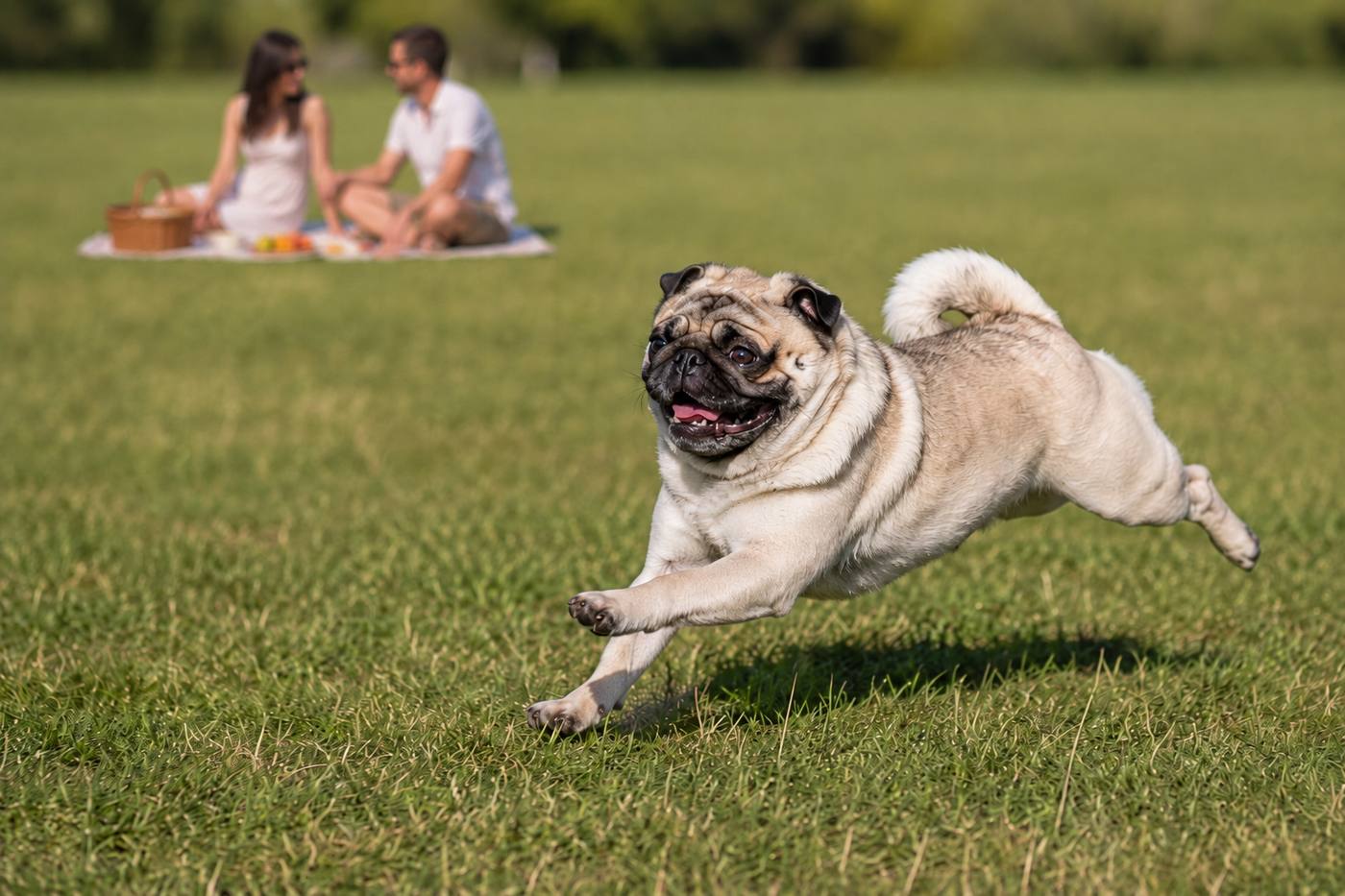
If your pug flops onto the sofa after a ten-minute walk and refuses to move, you're not imagining things. Pugs genuinely have lower exercise tolerance than most breeds, and that's not laziness — it's anatomy.
But low tolerance doesn't mean no exercise. Pugs still need regular movement to stay healthy, manage their weight, and avoid becoming bored and destructive. The challenge is finding the right amount for your pug, at this stage of their life, in this weather.
Here's what you actually need to know.
Do Pugs Need a Lot of Exercise?
No, pugs do not need a lot of exercise. Most adult pugs do best with short daily walks and gentle play rather than long or intense activity. Around 20 to 30 minutes total per day, split into two shorter walks, suits most healthy adult pugs — and that needs to be reduced further in warm weather. For heat-specific guidance, see how to keep a pug cool in summer.
Why Pugs Can't Exercise Like Other Dogs
Pugs are a brachycephalic breed, which means they have a shortened skull structure that compresses their airway. That flat face causes narrow nostrils, an elongated soft palate, and a smaller trachea — all of which make breathing harder during physical effort.
When a pug exercises, they can't move enough air efficiently to cool themselves down or keep their oxygen levels stable. They overheat faster. They tire faster. And unlike a Labrador who will pant and recover quickly, a pug can tip into real distress if pushed past their limit.
This isn't a reason to keep your pug on the sofa all day. It's a reason to exercise them smartly.
How Much Exercise Does an Adult Pug Need?
Most adult pugs do well with around 20 to 30 minutes of exercise per day, split across two shorter walks rather than one long one.
A typical setup that works well: a 15-minute walk in the morning and another in the evening. If one of those walks ends up shorter because your pug sat down and looked at you blankly, that's fine. Let them set some of the pace.
What matters more than hitting an exact minute count is consistency and watching how your pug responds. A pug who finishes a 20-minute walk breathing easily, with a normal gait, and settles calmly afterwards is being exercised at the right level. A pug who comes home wheezing, stumbling, or unable to stop panting needs shorter, gentler sessions.
What Counts as Exercise?
For a pug, exercise doesn't have to mean brisk walking. These all count:
Slow to moderate leash walks — the most reliable daily option
Gentle off-lead time in a garden or secure yard — sniffing counts as mental and physical activity
Short play sessions indoors — tossing a toy, simple fetch games
Nose work and puzzle toys — not cardio, but genuinely tiring for a pug mentally
Avoid jogging or running with your pug. It's not a suitable breed for high-intensity cardio, and their flat face means they can't cool themselves fast enough during sustained running.
Pug Puppy Exercise: The 5-Minute Rule
Pug puppies are excitable but their joints and bones are still developing, which means too much exercise too young can cause real harm — particularly to hips and elbows.
A commonly used guideline from veterinary sources is 5 minutes of exercise per month of age, up to twice a day. So a 3-month-old pug puppy might have around 15 minutes of walking twice a day, and a 5-month-old around 25 minutes.
Keep puppy exercise low-impact. Short walks on flat ground, gentle play in the house or garden. Avoid stairs, jumping, or anything that puts repeated stress on young joints.
Pug puppies also tire quickly, which makes overexertion less likely in practice — they'll usually just stop. But you still want to build the habit of short, calm sessions rather than letting them go full throttle and then crash.
A note on puppy breathing
Some pug puppies have noticeably loud or laboured breathing from early on. If your puppy seems to struggle breathing even at rest, or makes high-pitched wheezing sounds, speak to your vet. Some pugs benefit from corrective surgery to widen their nostrils or address airway issues, and doing this young tends to give better outcomes.
Senior Pug Exercise: Gentle But Important
Older pugs — generally from around 8 or 9 years onwards — often slow down noticeably. Their joints may stiffen, their breathing difficulties may worsen, and they'll tire more quickly.
This doesn't mean stopping exercise. In fact, gentle daily movement helps maintain muscle mass, supports joint health, and keeps weight from creeping up. But you'll likely shorten the walks, slow the pace, and pay more attention to how your pug feels before and after.
Shorter, more frequent gentle walks can work better than one longer daily outing. Watch for limping, excessive panting, or reluctance to walk — all of these are worth mentioning to your vet, especially in older pugs, as they can signal joint pain, heart issues, or worsening airway problems.
Heat Changes Everything
This is the most important practical note in this entire article.
Pugs overheat fast. Because they can't pant as effectively as other dogs, they can't cool themselves in warm or humid conditions. A walk that's completely fine in October can become dangerous in July.
On hot days — roughly anything above 20°C (68°F) — adjust accordingly:
Walk in the early morning or evening when it's cooler
Keep walks short — 10 minutes may be plenty
Avoid pavements that have been baking in the sun (test with your hand — if it's hot to touch, it's too hot for paw pads)
Watch your pug closely for any signs of overheating
Signs of overheating in pugs include:
Excessive or very loud panting that doesn't settle
Pale or bluish gums
Stumbling or weakness
Drooling more than usual
Collapsing or inability to stand
If you see these signs, stop immediately, move your pug to shade or indoors, offer water, and contact your vet. Heatstroke in pugs is a genuine emergency.
Harness, Not Collar
If you walk your pug on a collar and lead, it's worth switching to a harness. Collars put pressure directly on the neck and trachea, which is a concern for brachycephalic dogs who already have restricted airways. A well-fitted harness distributes pressure across the chest instead.
If your pug has known breathing issues or has had airway surgery, ask your vet which type of harness they recommend.
Signs You're Exercising Your Pug at the Right Level
You don't need a stopwatch. A well-exercised pug:
Settles calmly after walks without prolonged panting
Maintains a healthy weight (you should be able to feel their ribs without pressing hard, but not see them)
Sleeps well and isn't destructive or constantly restless
Shows mild, manageable enthusiasm for walks — not manic, not refusing
If your pug is gaining weight, ask your vet before simply adding more exercise. Diet is usually the bigger factor, and adding too much exercise too quickly can do more harm than good for a brachycephalic dog.
When to Talk to Your Vet
Mention exercise to your vet if:
Your pug collapses, stumbles, or seems confused after walks
Breathing doesn't settle within a few minutes of stopping exercise
You notice a sudden change — a pug who used to manage 25 minutes now struggles with 10
Your pug is very young and already showing signs of airway difficulty
Your pug is overweight and you're not sure how much exercise is safe
Pugs with more severe brachycephalic obstructive airway syndrome (BOAS) may need a specifically tailored exercise plan from their vet. There's no one-size-fits-all number.
A Quick Summary
- Adult pugs need around 20–30 minutes of exercise per day, split into two shorter walks
- Never exercise in temperatures above 20–22°C (68–72°F) — walk early morning or evening instead
- Pug puppies: max 5 minutes of walking per month of age, twice a day
- Senior pugs (8+ years): shorter, slower, more frequent short walks
- Stop immediately if you see heavy panting, stumbling, or pale/blue gums — contact your vet
- Always use a harness, never a collar, for walks
- When in doubt, less is safer
Related Articles
Is a Pug Right for You? Honest Guide for Future Owners
Thinking about getting a pug? Read the honest pros, cons, health needs, lifestyle fit, and real ownership costs before you commit.
Read more →How to Take Care of a Pug: Complete Beginner's Guide
Everything new pug owners need: daily routines, feeding, grooming, exercise, training, and health basics.
Read more →
How Hot Is Too Hot for a Pug? Heat Safety Guide
Learn what temperatures can be risky for pugs, how to spot overheating, and how to keep your pug cool and safe in warm weather.
Read more →