Pug Puppy Care: How to Care for a Pug Puppy
Learn how to care for a pug puppy, including feeding, sleep, potty training, vet visits, socialization, exercise, heat safety, and your first-week routine.
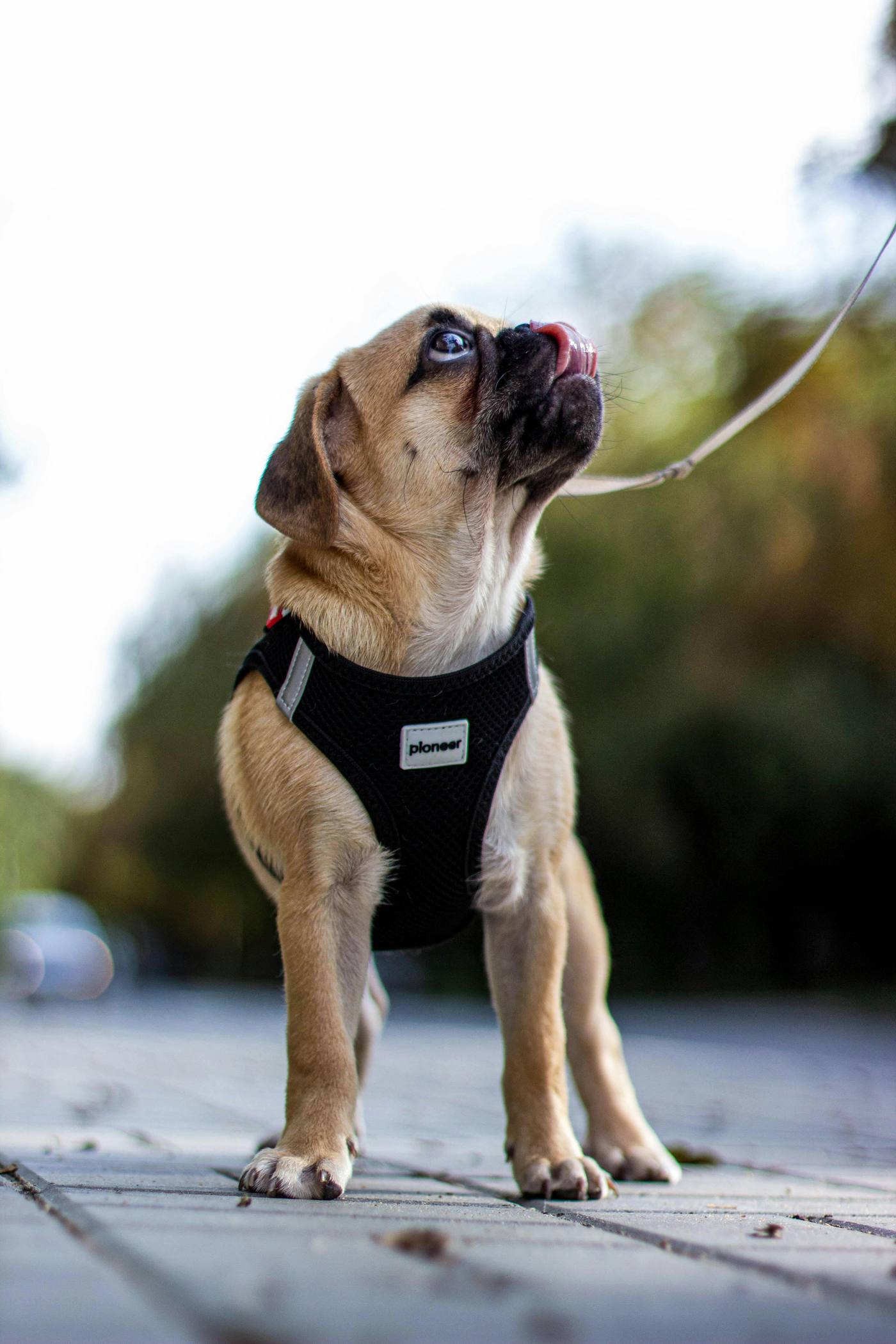
Bringing a pug puppy home is wonderful and a little overwhelming at the same time. You've probably already noticed that pugs are not quite like other puppies — they breathe differently, they overheat faster, their little faces have folds that need looking after, and they have a talent for finding the most dramatic way to fall asleep.
This guide covers everything you need to get through those first weeks confidently. It's written specifically for pugs, because general puppy advice only goes so far with this breed.
How to Care for a Pug Puppy
To care for a pug puppy well, feed small measured meals several times a day, keep exercise short and gentle, clean their facial folds regularly, protect them from heat, follow your vet's vaccination schedule, and start gentle socialisation early. The sections below walk through each of these in more detail, including what makes pug puppies different from other breeds.
For related reading, see our guides on common pug health issues and how much exercise a pug needs.
How Old Should a Pug Puppy Be When You Bring Them Home?
Most breeders will send puppies home at 8 weeks, which is the minimum legal age in many countries. For pugs specifically, many experienced breeders prefer to keep puppies until 10–12 weeks. Pug puppies can be slower to develop socially than some other breeds, and those extra weeks with their mother and littermates matter more than most people realise.
If a breeder is pushing to rehome a pug puppy before 8 weeks, that's a red flag worth taking seriously.
The First Few Days at Home
Expect your puppy to be confused, tired, and possibly vocal. They've just left everything familiar. Keep things calm. Limit visitors for the first couple of days. Let the puppy explore at their own pace.
Set up a small, safe area — a playpen or a gated section of a room works well. Pug puppies are curious but also easily overwhelmed, and a defined space helps them settle faster than giving them the run of the house immediately.
Sleep will be broken for a while. Pug puppies sleep a lot — up to 18–20 hours a day in the early weeks — but they'll also wake in the night, especially in the beginning. A warm (not hot) blanket and a ticking clock or low-noise white noise machine near their sleeping area can help ease the transition away from their littermates.
Feeding Your Pug Puppy
How often to feed: Pug puppies under 12 weeks typically need four small meals a day. From 12 weeks to around 6 months, three meals a day is usually appropriate. After 6 months, most owners move to two meals a day. Ask your vet what works best for your puppy's size and growth stage.
What to feed: Stick with whatever food the breeder was using for at least the first week or two. A sudden change in food is a reliable way to cause an upset stomach. If you want to switch, do it gradually — mix the new food in with the old over 7–10 days.
Look for a puppy food formulated for small breeds. Pug puppies don't need large breed puppy food, and their portions should be measured carefully. Pugs are prone to weight gain from a young age, and a chubby puppy can develop joint and breathing problems as they grow. A pug that looks round and well-fed at 4 months may actually be heading toward obesity.
Treats: Keep treats small and use them sparingly, especially during training. Overfeeding through treats is a common mistake with pug puppies because they are so enthusiastic about food that it feels good to give them more.
Exercise — Much Less Than You Think
This is where new pug owners often get it wrong in both directions — either they over-exercise a puppy because they're energetic, or they under-exercise them because they seem lazy.
A widely used guideline for puppies is around 5 minutes of exercise per month of age, once or twice a day. So a 3-month-old puppy needs roughly 15 minutes of walking at a time, not an hour. Puppy bones and joints are still developing, and over-exercise puts real strain on them.
For pug puppies specifically, there's an extra consideration: their airways. Pugs are a brachycephalic breed, meaning their shortened muzzle causes their airway to be compressed. A pug puppy that is panting heavily, making high-pitched breathing sounds, or struggling to settle after short activity should rest — and if it's frequent, should be seen by a vet.
Short, gentle walks on a flat surface are ideal. Avoid exercise in warm weather (more on that shortly). Indoor play counts too.
Heat Sensitivity Starts From Day One
Pug puppies cannot regulate their temperature well. Unlike a Labrador puppy that might happily run around on a warm afternoon, a pug puppy can overheat in minutes.
Keep the following in mind:
Avoid walks during the warmest part of the day, even in mild weather
Never leave a pug puppy in a warm car, even briefly
Make sure their sleeping area is cool and well-ventilated
Watch for heavy panting, drooling, or lethargy after any activity — these are signs they're too hot
A good rule of thumb: if the pavement feels warm to the back of your hand for 7 seconds, it's too hot for their paws and their body.
Wrinkle Care — Start Early
Pug puppies don't always have deeply pronounced wrinkles yet, but the folds on their face still need attention from the start. Getting them used to having their face touched and cleaned while they're young makes the whole process much easier when they're adults.
Use a soft, dry cloth or unscented baby wipe to gently clean between the folds a few times a week. You're looking for any buildup of moisture or debris that can lead to skin irritation or yeast infections. After cleaning, make sure the fold is dry — moisture sitting in the crease is the problem, not the cleaning itself.
If you notice redness, a bad smell, or your puppy pawing at their face, it's worth a vet visit rather than just cleaning more. Skin fold dermatitis can develop quickly and needs proper treatment.
Eyes and Nose
Pug puppies are prone to eye issues because their eyes are prominent and exposed. A small amount of clear or slightly cloudy discharge in the corner of the eye is normal. Excessive discharge, redness, swelling, or your puppy squinting frequently should be checked by a vet.
Keep the area around their eyes clean gently with a damp cloth.
Their nose roll (the fold just above the nose) may also collect moisture. Keep it clean and dry in the same way you manage the face folds.
Vet Visits and Vaccinations
Book a vet appointment within the first week of bringing your puppy home — ideally within the first few days. This is a basic health check, not an emergency visit, but it's important to establish your puppy's baseline and check they arrived healthy.
Vaccination schedules vary by country and vet practice. In the UK, puppies typically receive their first vaccines at around 8–10 weeks and a second round 2–4 weeks later. In the US, the schedule often begins at 6–8 weeks with multiple boosters through 16 weeks. Your vet will advise on the exact timing.
Until your pug puppy is fully vaccinated, avoid letting them walk on surfaces where unknown dogs have been — dog parks, pet shop floors, and paths popular with other dogs carry risks. Puppy classes that require proof of vaccination are generally considered safe and are worth looking into once your puppy is covered.
Your vet will also discuss flea, tick, and worm prevention. Start this early and keep it consistent.
Socialisation — The Window Is Short
The socialisation window for puppies — the period when they're most receptive to new experiences — runs roughly from 3 to 14 weeks, with the most critical phase closing around 12–16 weeks. This means the early weeks at home matter a lot.
You want your pug puppy to experience a wide range of sounds, surfaces, people, and (carefully chosen) animals in a positive way during this period. This doesn't mean overwhelming them — it means short, calm exposure to the kinds of things they'll encounter throughout their life.
Vacuum cleaners, traffic noise, children, other dogs (healthy ones you know), different floor surfaces, umbrellas, hats — anything that might startle them later is worth introducing gently now.
Puppy classes, once fully vaccinated, are also a good idea for both socialisation and the basics of training.
What to Watch For in a Pug Puppy
Pug puppies are generally robust little characters, but there are a few things worth knowing:
Breathing sounds: Some snuffling and snoring is normal for pugs, even as puppies. But laboured breathing at rest, frequent open-mouth breathing, or a high-pitched sound during exercise can be signs of BOAS (Brachycephalic Obstructive Airway Syndrome). Not all pugs will need treatment, but it's worth raising with your vet sooner rather than later.
Reverse sneezing: This is common in pugs and looks alarming if you've never seen it — a rapid, honking inhalation that can last 20–30 seconds. It's usually harmless. If it happens very frequently or your puppy seems distressed, mention it to your vet.
Loose stools: Very common in the first days after a diet change or the stress of moving home. Should settle within a few days. If it persists, or if you see blood, contact your vet.
Lethargy beyond normal sleep: Puppies sleep a lot. But a puppy that won't engage at all, won't eat, or seems genuinely unwell should be seen promptly.
A Note on Collars and Harnesses
Because pugs already have compressed airways, a collar putting pressure on their neck during walks is not ideal — particularly if they pull or if they have any breathing concerns. Most vets and pug owners recommend using a harness instead of a collar for walks. Your vet can advise on the best option for your puppy's size and breathing status.
FAQ
How long do pug puppies sleep?
A lot — typically 16–20 hours a day in the early weeks. This is completely normal. A sleeping puppy is a developing puppy. Let them rest between play and activity.
My pug puppy is breathing noisily. Should I be worried?
Some snuffling and snoring is normal for the breed. However, if your puppy is breathing hard at rest, struggling after minimal activity, or making a high-pitched wheeze regularly, it's worth discussing with your vet. BOAS is a real condition in pugs and is better assessed early.
When can I start walking my pug puppy outside?
Most vets advise waiting until full vaccination is complete before walking in public areas. Once vaccinated, keep walks short — 5 minutes per month of age is a commonly used guide. Always avoid the heat of the day.
How often should I clean my pug puppy's wrinkles?
A gentle clean a few times a week is usually enough while they're young. The key is keeping the folds dry rather than wet. If you notice redness or smell, see a vet — don't just clean more aggressively.
Should I feed my pug puppy wet or dry food?
Both are fine if they're nutritionally complete and appropriate for puppies. Many owners use dry food (kibble) as the base because it's easier to measure and better for dental health, with occasional wet food as a topper. Whatever you choose, stick to what the breeder used initially and transition slowly.
At what age do pug puppies calm down?
Most pug puppies have bursts of energy followed by long naps. They typically become a bit more settled around 12–18 months, though pugs generally remain playful and affectionate throughout their lives. The dramatic napping, however, starts early and never really stops.
Related Articles
Can Pugs Be Left Alone? Separation Anxiety Guide
How long can a pug be left alone, signs of separation anxiety, and practical steps to help your pug feel calm when you're out.
Read more →
Is a Pug Right for You? Honest Guide for Future Owners
Thinking about getting a pug? Read the honest pros, cons, health needs, lifestyle fit, and real ownership costs before you commit.
Read more →Are Pugs Easy to Train? Beginner Training Guide
Pugs can be stubborn, but they are trainable. Learn what actually works, how short sessions should be, and the biggest mistakes to avoid.
Read more →